TEST! Check.
Met een hoop dingen.


James Newell Osterberg Jr. (born April 21, 1947), known professionally as Iggy Pop, is an American singer, songwriter, musician, and actor who was the lead vocalist of the proto-punk band the Stooges.[1] Regarded as the “Godfather of Punk“,[2][3] he is noted for his outrageous and unpredictable stage antics, poetic lyrics, and unique voice.[4][5][6] He was named one of the 50 Great Voices by NPR, inducted into the Rock and Roll Hall of Fame as a member of the Stooges in 2010, and received a Grammy Lifetime Achievement Award in 2020 for his solo career.[7]
He had a long collaborative relationship and friendship with David Bowie over the course of his career, beginning with the Stooges’ album Raw Power in 1973. Both musicians went to West Berlin to wean themselves off their respective drug addictions and Pop began his solo career by collaborating with Bowie on the 1977 albums The Idiot and Lust for Life, Pop usually contributing the lyrics.
Initially playing a raw, primitive style of rock and roll (progressing later towards more experimental and aggressive rock), the Stooges sold few records in their original incarnation and gained a reputation for their confrontational performances, which sometimes involved acts of self-mutilation by Pop.[8] He was one of the first performers to do a stage-dive and popularized the activity.[9][10] Pop, who typically performs bare-chested, also performed such stage theatrics as rolling around in broken glass and exposing himself to the crowd.[11][10]
Though his popularity has fluctuated, many of Pop’s songs have become well known, including “Search and Destroy” and “I Wanna Be Your Dog” by the Stooges, and his solo hits “Lust for Life“, “The Passenger” and “Real Wild Child (Wild One)“. In 1990, he recorded his only Top 40 U.S. hit, “Candy“, a duet with the B-52s‘ singer Kate Pierson. Pop’s song “China Girl” became more widely known when it was re-recorded by co-writer Bowie, who released it as the second single from his most commercially successful album, Let’s Dance (1983). Bowie re-recorded and performed many of Pop’s songs throughout his career.
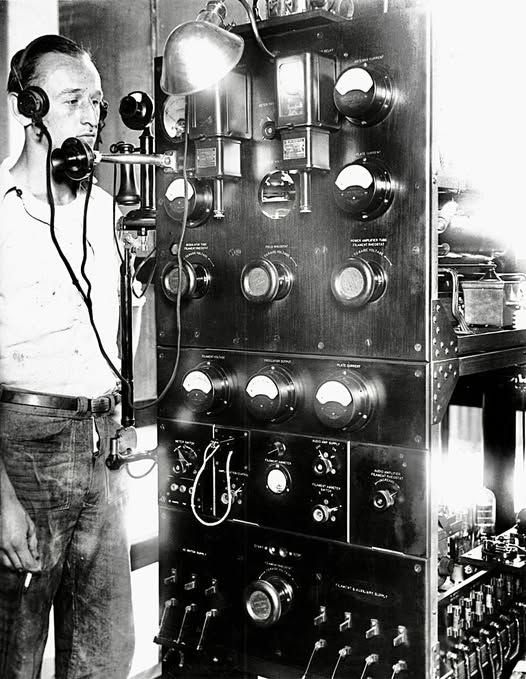
Een telefooncentrale is een installatie waarmee het mogelijk is telefoontoestellen zo te verbinden dat een gesprek mogelijk wordt. De telefooncentrale bevindt zich doorgaans op een centrale plek ten opzichte van de aangesloten toestellen. Telefooncentrales bestaan in verschillende groottes en functionaliteit: huistelefooncentrale, bedrijfscentrale, lokale centrale, transitcentrale, interconnectiecentrale. Centrales kunnen analoog of digitaal zijn en gebruikmaken van koper-, glasvezel– en/of radioverbindingen.
Door de toenemende Digitalisering en Internet zijn er steeds minder fysieke telefooncentrales.
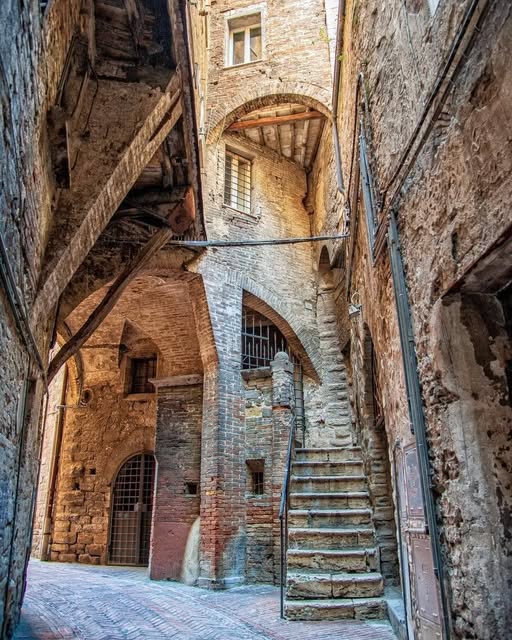
Venetië (Italiaans: Venezia, Venetiaans: Venèsia) is een stad in het noordoosten van Italië. De stad werd gesticht in de 5e eeuw en is gebouwd op 118 kleine eilanden. Venetië is wereldwijd bekend vanwege de ligging aan het water, het historische centrum met monumentale gebouwen, bruggen en kanalen. Het is een populaire toeristische bestemming.
De aan de Adriatische Zee gelegen stad vormde eeuwenlang de toegang van West-Europa tot de Zijderoute en speelde een belangrijke rol in de Europese geschiedenis. Venetië bracht Europa vernieuwingen zoals wissel- en kredietbanken, boekhouding, obligatiemarkten en belangrijke verbeteringen in de scheepsbouw. Vanuit Azië en Egypte werden technieken rond suikerriet, zijde, glasblazen en sieraden geïntroduceerd. Sinds 1987 staan de stad Venetië en haar lagune op de Werelderfgoedlijst van de UNESCO.
De gemeente Venetië telde op 31 december 2021 officieel 254.850 inwoners, van wie 50.434 in het historische centrum van de stad Venetië zelf (centro storico), 26.795 op andere eilanden die tot de gemeente behoren, en 177.621 op het vasteland, voornamelijk in Mestre.[2] Het is de hoofdstad van de regio Veneto.
Geschiedenis
 Zie Republiek Venetië voor het hoofdartikel over dit onderwerp.
Venetië ligt op een groep kleine eilanden midden in de Lagune van Venetië, die al in de tijd van het Romeinse Rijk Venetia werd genoemd. Er woonden al eeuwen mensen, maar de eerste grotere nederzettingen kwamen er pas als gevolg van de toestroom van bewoners uit de Romeinse steden in de omgeving van Venetië, zoals Padua, Treviso en Altino, die hun toevlucht zochten in de lagune na de invallen van Attila rond 452 en van de Longobarden in 568 ten tijde van het instorten van het West-Romeinse Rijk. Dit bleek een strategische plek te zijn: troepen van het land konden niet in groten getale naar de eilanden komen en schepen vanaf zee liepen makkelijk vast op de verraderlijke zandbanken in de lagune.
Deel van het Byzantijns Rijk
In het midden van de zevende eeuw was de strijd min of meer al beslist, maar het Byzantijnse Rijk behield in Italië onder meer de regio Veneto. De hoofdstad der Venetianen was tot circa 750 Eraclea; in het Latijn Heracliana of in Grieks-Byzantijns Heraclia. Van circa 750 tot 810 was de hoofdstad de bisschopsstad Malamocco, of in het Latijn Metamaucum.
Omdat in de achtste eeuw de dreiging door Longobarden en nadien door Franken bleef voortduren, kreeg het gebied een eigen, voor het leven gekozen leider. Dit was de zogeheten doge, naar dux (het Latijnse woord voor leider).

A toilet[n 1] is a piece of sanitary hardware (sanitaryware) that collects human waste (urine and feces) and sometimes toilet paper, usually for disposal. Flush toilets use water, while dry or non-flush toilets do not. They can be designed for a sitting position popular in Europe and North America with a toilet seat, with additional considerations for those with disabilities, or for a squatting posture more popular in Asia, known as a squat toilet. In urban areas, flush toilets are usually connected to a sewer system; in isolated areas, to a septic tank. The waste is known as blackwater and the combined effluent, including other sources, is sewage. Dry toilets are connected to a pit, removable container, composting chamber, or other storage and treatment device, including urine diversion with a urine-diverting toilet. “Toilet” or “toilets” is also widely used for rooms containing only one or more toilets and hand-basins. Lavatory is an older word for toilet.
The technology used for modern toilets varies. Toilets are commonly made of ceramic (porcelain), concrete, plastic, or wood. Newer toilet technologies include dual flushing, low flushing, toilet seat warming, self-cleaning, female urinals and waterless urinals. Japan is known for its toilet technology. Airplane toilets are specially designed to operate in the air. The need to maintain anal hygiene post-defecation is universally recognized and toilet paper (often held by a toilet roll holder), which may also be used to wipe the vulva after urination, is widely used (as well as bidets).
In private homes, depending on the region and style, the toilet may exist in the same bathroom as the sink, bathtub, and shower. Another option is to have one room for body washing (also called “bathroom”) and a separate one for the toilet and handwashing sink (toilet room). Public toilets (restrooms) consist of one or more toilets (and commonly single urinals or trough urinals) which are available for use by the general public. Products like urinal blocks and toilet blocks help maintain the smell and cleanliness of toilets. Toilet seat covers are sometimes used. Portable toilets (frequently chemical “porta johns”) may be brought in for large and temporary gatherings.
Historically, sanitation has been a concern from the earliest stages of human settlements. However, many poor households in developing countries use very basic, and often unhygienic, toilets – and 419 million people have no access to a toilet at all; they must openly defecate and urinate.[1] These issues can lead to the spread of diseases transmitted via the fecal-oral route, or the transmission of waterborne diseases such as cholera and dysentery. Therefore, the United Nations Sustainable Development Goal 6 wants to “achieve access to adequate and equitable sanitation and hygiene for all and end open defecation”.